Neighborhood Intelligence · Updated for 2026
East vs. West Corridors
in South Florida
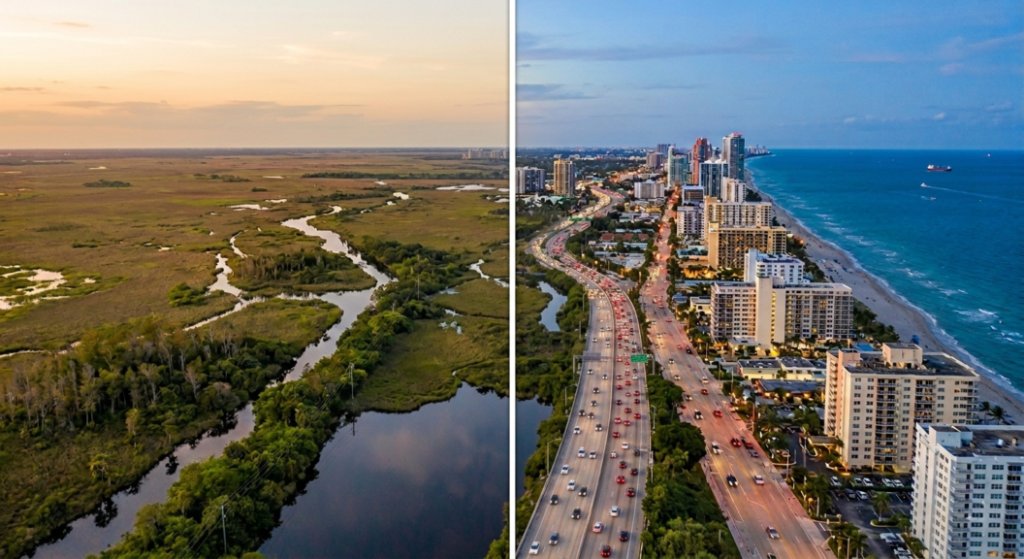
South Florida's geography divides naturally into coastal east and suburban west — each with distinct housing markets, insurance costs, school options, and lifestyle. Use our interactive priority tool to see which corridor matches your needs.
Equal Housing Opportunity & Disclaimer. All communities described are open to all qualified buyers equally regardless of race, color, national origin, religion, sex, familial status, or disability. This guide describes geographic, market, and infrastructure characteristics only — not recommendations based on community demographics. All price ranges and cost estimates are general 2026 market guidance; consult licensed professionals for property-specific advice.
Understanding the East–West Geography
In Broward and Palm Beach counties, "east" generally means communities east of I-95 — closer to the Atlantic Ocean and Intracoastal Waterway. "West" means communities west of I-95, extending to the Everglades boundary. In Miami-Dade, the divide is similar: coastal Brickell/Miami Beach vs. inland Doral/Kendall.
Neither corridor is superior — they represent fundamentally different lifestyle priorities, financial profiles, and daily rhythms. Many buyers initially assume they want to be "close to the beach" until they understand the full cost difference. Others discover that the value and quality of life in western communities far exceeds their expectations.
County-by-County Comparison
🌊 East Broward — Coastal
Fort Lauderdale, Pompano Beach, Deerfield Beach, Hallandale Beach, Hollywood Beach
Community Character
Dense, walkable pockets, high-rise condos east of US-1, older SFH stock east of A1A
🏡 West Broward — Suburban
Coral Springs, Weston, Parkland, Coconut Creek, Pembroke Pines
Community Character
Master-planned, HOA communities, newer construction, family-focused
All figures are general 2026 market estimates. School ratings change annually — verify with each district directly. Insurance estimates vary by specific property. Consult licensed professionals for property-specific guidance.
Priority Matcher — East or West?
Select your top priorities to see which corridor tends to align. For reflection purposes only.
Insurance Cost Reality: East vs. West
East of I-95 (Coastal Zone)
Wind/HO-3: $4,500–$14,000+/yr
Flood: $2,000–$12,000+/yr if in SFHA
Highest wind exposure; many AE/VE zones
Between I-95 & Turnpike
Wind/HO-3: $3,000–$7,000/yr
Flood: Varies widely by specific location
Transition zone — check each property
West of Florida's Turnpike
Wind/HO-3: $2,200–$5,000/yr
Flood: $400–$1,200/yr (many Zone X)
Lowest wind/flood exposure in SFL
Insurance estimates only. Actual costs depend on construction year, roof type, opening protections, coverage amounts, and specific insurer. Always obtain quotes from multiple licensed Florida insurers before purchasing.
Not Sure Which Corridor Fits Your Life?
Jacob maps your daily routine, commute, school priorities, and total budget to specific neighborhoods across both corridors — at no cost to all buyers.
Equal Housing Opportunity. Services available to all buyers equally.